Athletes get coached for every season but the last one.
Twenty-nine years rinkside, with elite athletes who mostly started with me as children. I know what the sport asks of you, what it gives back, and what it takes with it when it ends. That last part is where almost nobody gets any help at all.
Three ways the sport stops working
You do not need to be finished competing to be in one of these. Two of the three happen at the height of a career, not the end of it.
Athlete identity loss after retirement
The identity you trained for since childhood stops, and nobody hands you the next one. You are the same person on Monday with nothing to be. This is the most common reason a former athlete ends up in my office, and the one they are least likely to name out loud.
Burnout in young athletes
The love goes before the ability does. Training becomes dread, the results hold up for a while, and everybody assumes it's a motivation problem. It is almost never a motivation problem, and pushing harder at that point is how careers end early.
The mental game under real pressure
You can do it in practice and you cannot do it at the competition. Injury changed how you trust your own body. The fear arrived somewhere along the way and now it makes decisions for you. All trainable, none of it by trying harder.
I learned this at a rink, not in a seminar
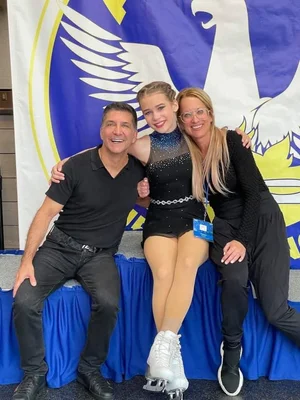
I started coaching figure skating in 1997. Elite athletes, most of them children when they started with me, and a few of them still with me twenty years later. You learn things rinkside that you cannot learn anywhere else: that talent is common, that discipline is trainable, and that the thing standing between an athlete and what they want is almost never information.
What I kept seeing was the collapse afterwards. The season ends, the body gives out, the identity that took fifteen years to build disappears in an afternoon, and nobody has a plan for that.
So I trained for the other side of it. I'm ICF accredited and certified trauma-informed, and I use the same logic I used at the rink: you don't fix a season with motivation, you periodize it.
Tracey has been my coach since I was 11 years old. I’m in my 30’s now and Tracey still guides me. I wouldn’t be the strong, driven, and capable woman I am today without her.Imani Givertz · Creative Director


You're probably the one searching. They're probably not.
Most of the time it isn't the athlete who finds me. It's a parent who can see something is wrong and can't get a straight answer about what, because the athlete either doesn't have the words yet or won't use them with you.
That's normal, and it isn't a failure of your relationship. There are things a fifteen-year-old will say to a coach that they will never say at the kitchen table, and that gap is exactly what I'm useful for.
What I won't do is take your money to tell your child to want it more. If what's happening is a training-load problem, a coaching-relationship problem, or something that needs a doctor or a therapist, I will say so on the first call. Apply for coaching.
It's time to grind. Let's go.
Bring the thing you've stopped saying out loud.
Fill out the questionnaire. If I think you're a good fit, I'll get in touch. If I don't think I can help, I'll point you to someone who can. Apply for coaching.
Serving clients in South Florida and remotely